top of page

Paving and Retaining Wall Options to Enhance Your Landscape Design

  • Writer: J F Gray Landscaping
    J F Gray Landscaping
  • 14 minutes ago
  • 5 min read

A strong outdoor space starts with solid groundwork. In Central Massachusetts, effective landscape and hardscape design provides durable surfaces that withstand freeze–thaw conditions, snow removal, and regular use. Since 2015, J.F. Gray Landscape Construction & Paving has delivered projects ranging from driveway paving and walkway installations to full patio builds and engineered wall systems, serving everything from compact entryways to large terraces.


This guide reviews current paving and retaining wall options and breaks down construction details that influence long-term performance. These include base preparation, grading, compaction, edge restraints, wall drainage, and geogrid use, each playing a key role in keeping your project stable and aligned over time.


Before you select materials, confirm slopes, access, and soils. If you’d like a primer on pitch, cut/fill, and setting subgrade elevations, start with What Is Grading in Construction. It frames the decisions that follow, from patio pavers to segmental retaining walls.


Paver Systems for Patios, Walks, and Drives


Concrete pavers remain the most versatile choice for patio paving, courtyards, and walkway pavers. Manufactured to tight tolerances, they pair aesthetic range with engineered strength. 


In vehicular areas, thickness and base depth are sized to loads, and proper edge restraints keep the field locked so joints don’t spread under braking or freeze–thaw. Current technical notes from the Concrete Masonry & Hardscapes Association (CMHA) emphasize that restraints are required along the perimeter and at material transitions to resist horizontal forces from traffic and winter cycles. 


Natural stone pavers bring a timeless New England look. A bluestone patio, thermal or natural cleft, offers color depth, traction, and long service life. Granite steps and landings deliver high durability on grade changes and at front entries where de-icing is common. 


Permeable pavers (PICP) address stormwater while keeping design flexibility. They look like conventional interlocking systems but use open-graded stone in the joints and base to accept, store, and infiltrate runoff. Federal Highway Administration guidance documents the hydrologic and structural design considerations for PICP, including reservoir depth, joint stone, and maintenance to sustain infiltration. Robust curbs or restraints are critical for vehicle-rated edges. 


When comparing natural stone pavers to concrete pavers, weigh repairability, cost, and pattern control. Interlocking units excel at modular repairs and consistent joint lines; stone shines where authenticity and regional character are priorities. 


In both cases, long-term performance is won or lost in the foundation: competent subgrade, correct base gradation, and methodical compaction and grading in thin lifts. Recent industry guidance reiterates that vehicle pavements should be engineered to ASCE/ICPI methods and built to current CMHA/ICPI specifications. 


Asphalt and Decorative Surfaces


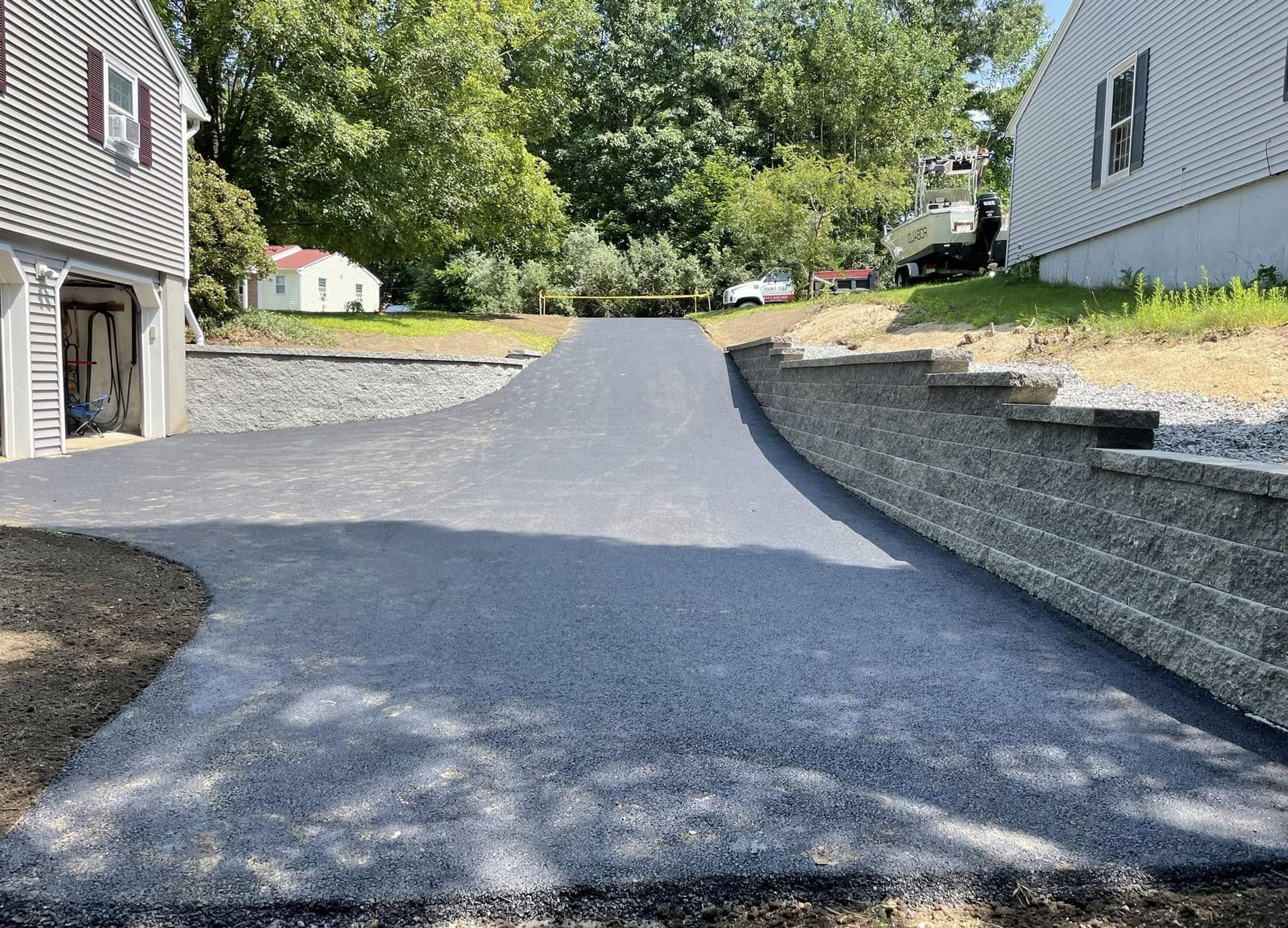
For long runs and sloped drives, hot-mix driveway paving remains a value leader. A dense, smooth surface and fast snow removal are everyday wins, provided the base and drainage are right. The National Asphalt Pavement Association offers best-practice resources for mix, compaction, and installation sequencing that contractors apply to residential contexts. 


If you want a custom look without a full paver system, stamped asphalt paving uses templates and polymer-modified coatings to suggest brick, herringbone, or stone banding at aprons and crossings. Manufacturers and trade publications describe the process: imprint a heated mat into hot or reheated asphalt, then color and protect the surface. It’s a practical way to add curb appeal at the street edge or to define pedestrian zones without changing the entire pavement structure. 


A stamped concrete walkway is another decorative option for entries and garden axes. Compared with pavers, it offers broad, continuous patterns and integral color in a single structural pour; the trade-off is that repairs are less modular. As with pavers and asphalt, success comes back to base density, expansion/control joints, thoughtful transitions, and winter drainage.


Segmental Retaining Walls, Garden Walls, and Terraces


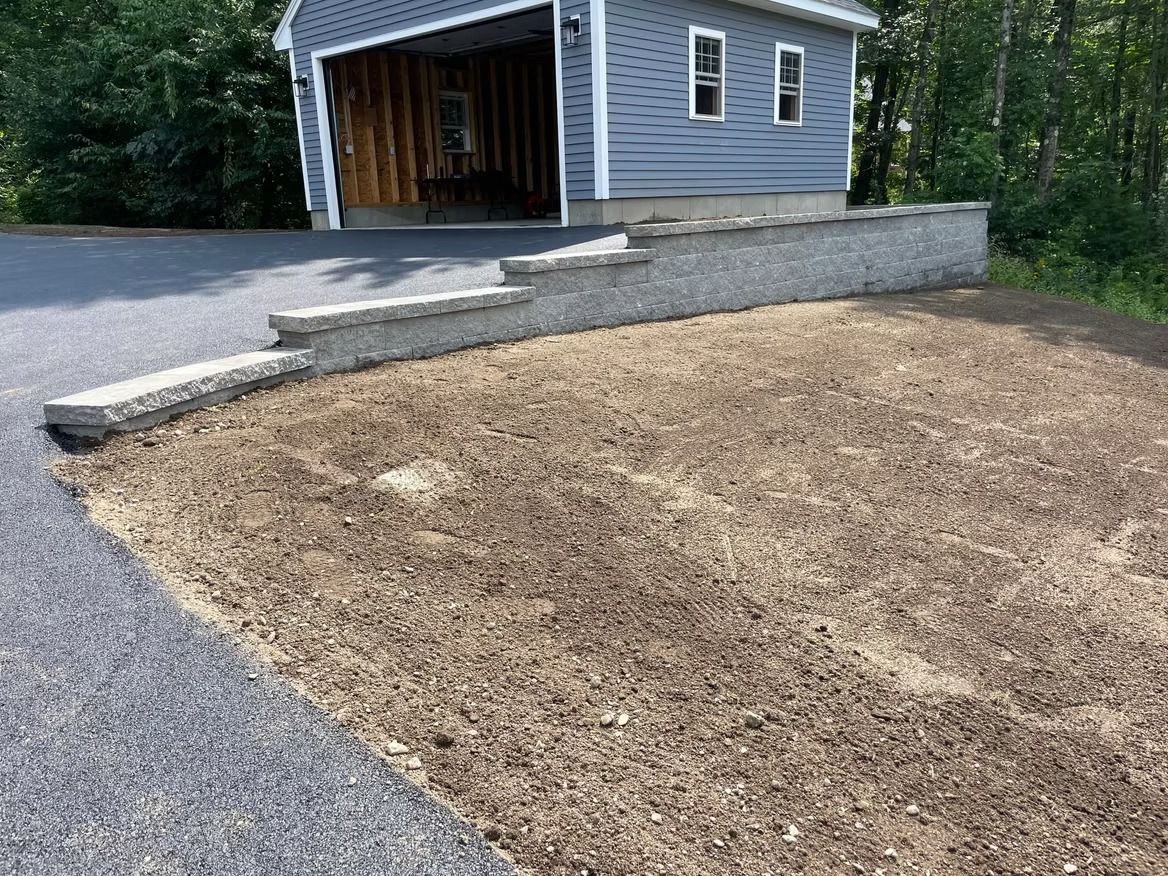
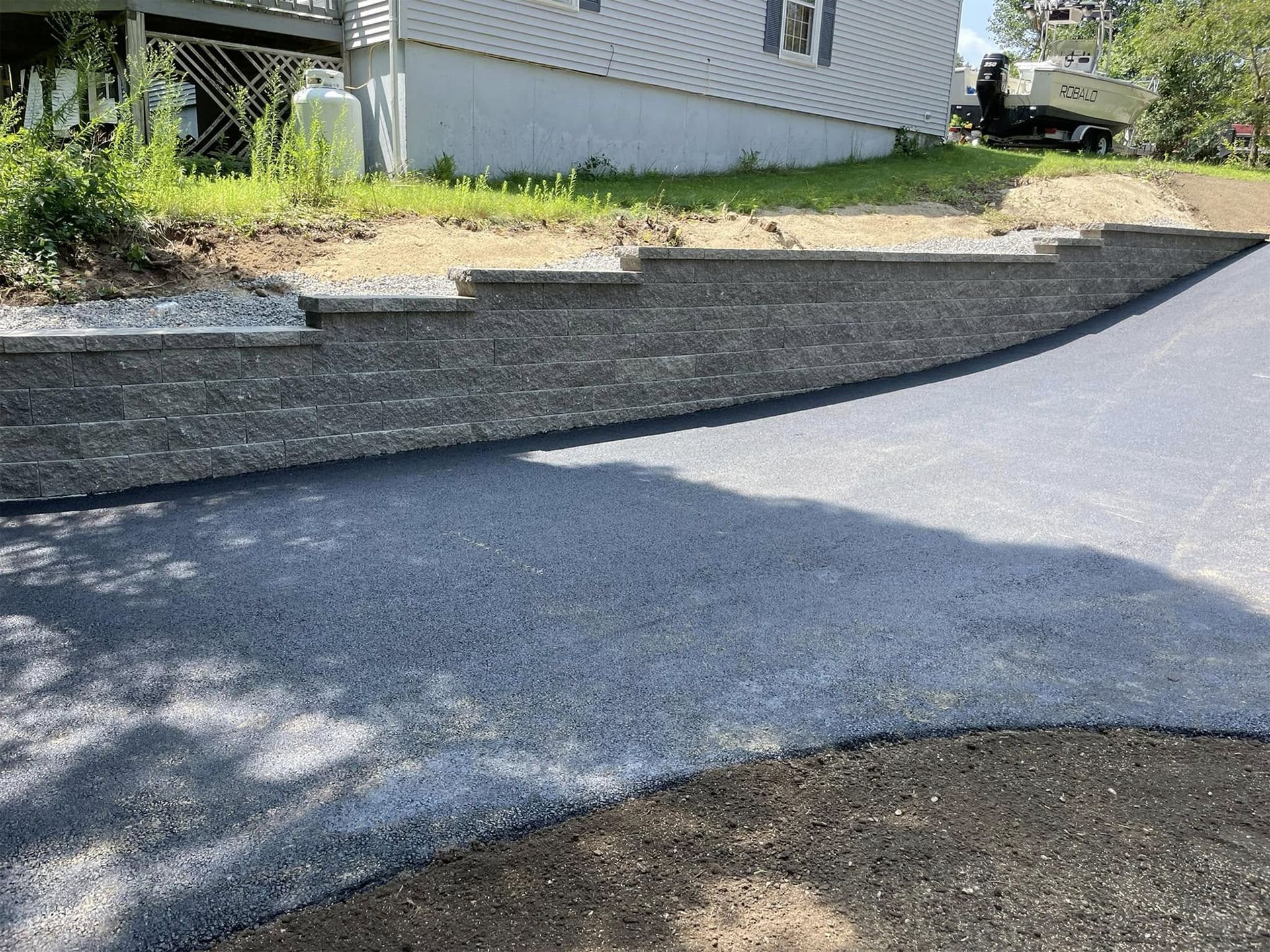
Modern segmental retaining walls (SRWs) cover projects from short garden retaining walls to engineered structures supporting driveways and slopes. A basic gravity wall relies on unit weight and setback (batter). As height, surcharge, or poor soils raise demands, the wall becomes a reinforced system with geogrid reinforcement that extends into compacted backfill, forming a composite mass. 


Current CMHA/NCMA manuals and best-practices guides explain grid selection, embedment length, spacing, and compaction requirements for stable structures that tolerate seasonal movement. 


Terraced walls break a big grade change into smaller tiers to reduce apparent height, ease planting, and improve stability. If you prefer a natural aesthetic, limestone retaining walls or other natural stone assemblies can be detailed as gravity walls for modest heights, provided the foundation is competent and drainage is well managed behind the wall.


Regardless of the wall type, water control is non-negotiable. Every build needs a level, compacted base; clean, free-draining stone behind the face; filter fabric separation where soil meets stone; and a perforated drain with reliable outlets. 


Many homeowner issues trace back to hydrostatic pressure because drains weren’t sized or daylighted correctly. For an accessible walkthrough of pipe placement, backfill zones, and outlet strategy, see Retaining Wall Drainage Solutions.


Edges, Joints, and Transitions


Details connect systems into one landscape. Edge restraints, granite curbing, concrete bands, or concealed plastic/steel edging pinned into the base are essential for walkway pavers, patio pavers, and driveway aprons.


They prevent lateral spread, protect bedding layers, and maintain interlock under traffic and frost. Technical notes from CMHA stress that restraints must not be set on bedding sand and must be anchored into the base for stability in heaving soils. 


Joint strategy follows the system: polymeric sand for traditional interlocking fields to limit washout and weeds; clean stone for permeable pavers to preserve infiltration. At steps and landings, consider granite steps for durability and slip resistance during winter. Where patios meet lawn, a low reveal helps drainage and reduces mower scalping. At the top of walls, cap selection and overhang influence aesthetics, water shedding, and seating comfort.


Which System Fits Your Goals? 


  1. Elegant entry with high curb appeal: Natural stone pavers or large-format concrete pavers; add granite steps and lighting for year-round safety.

  2. Entertaining patio with low maintenance: Interlocking concrete pavers or a bluestone patio; plan zones for dining, a grill island, and a fire feature.

  3. Driveway with design accents: Hot-mix driveway paving for value and plowability; add stamped asphalt paving bands or a paver landing at the steps.

  4. Wet or icy problem areas: Permeable pavers with an open-graded base to accept and infiltrate runoff; specify robust curbs.

  5. Steep or uneven yards: Segmental retaining walls with engineered geogrid reinforcement; step or terrace the slope and integrate landings.


Construction Standards that Protect Your Investment 


  • Subgrade & separation: Remove organics; proof-roll and undercut soft spots; add geotextile where soils are weak.

  • Base preparation: Use well-graded aggregate in thin lifts; verify cross-slope and elevations with a laser or stringline; compact each lift thoroughly.

  • Bedding & joints: Screeded bedding sand (traditional ICP) or open-graded bedding (PICP); polymeric sand for conventional joints; clean stone for permeable joints.

  • Edge restraints: Anchor into the base (not bedding); use granite or concrete bands at vehicle edges and snow-exposed borders. 

  • Compaction & finishing: Vibratory plate compaction with a protective mat for pavers; hot compaction for asphalt to achieve lock density; clean, level, and seal as specified.

  • Retaining wall detail: True, compacted leveling pad; clean drainage stone and fabric separation behind the wall; perforated pipe with daylighted outlets; geogrid reinforcement as engineered.


Working with a Central MA Contractor


From design consultation to final cleanup, J.F. Gray coordinates layout, excavation, and structural components in one sequence: set elevations, complete base preparation, install edge restraints, lay the field, compact, and finish transitions. 


For walls, our team verifies bearing conditions, places the leveling pad, checks each course, builds the drainage zone, and installs grids to the specified lengths and elevations. That discipline, paired with appropriate materials, from concrete pavers to limestone retaining walls, is what keeps joints tight, caps aligned, and water moving where it belongs.


If you’re weighing options for landscape design upgrades, walkway pavers, a stamped concrete walkway, a bluestone patio, or a set of terraced walls, we’re here to help you balance aesthetics, performance, and budget for Massachusetts conditions.


Ready to plan your project? Contact J.F. Gray Landscape Construction and Paving to schedule a consultation.


Comments


©2024 by J.F Gray Landscape Construction & Paving.

bottom of page